By Akash Sriram and Joey Roulette
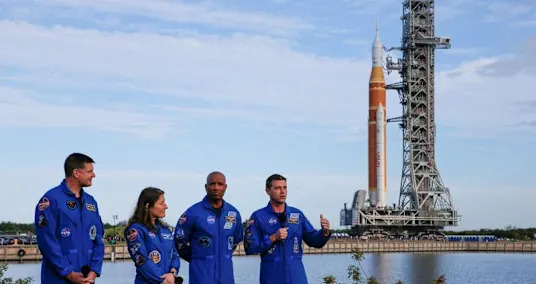
April 1 (Reuters) - NASA's Artemis II mission is shaping up to be more than just the next step in returning humans to the moon — it is a key test of whether the agency's traditional contractor-built systems can remain viable in a rapidly shifting space industry.
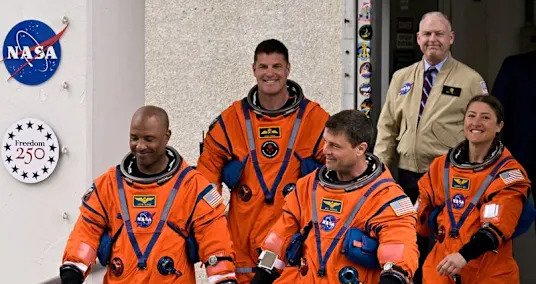
The mission, set to launch on Wednesday evening from the Kennedy Space Center in Florida, will send astronauts around the moon for the first time in over 50 years. It will be the first crewed flight of Boeing and Northrop Grumman's Space Launch System (SLS) rocket and Lockheed Martin's Orion capsule.
While both systems have undergone years of development and uncrewed testing, with the rocket's more than $24 billion development beginning in 2010, Artemis II marks the moment when their reliability will be judged under the highest possible stakes: human flight.
The outcome of Artemis II could reshape the political narrative around Orion as well as SLS, the world's most powerful active rocket, which has faced persistent criticism over delays, ballooning costs and a relatively slow launch rate.
"The stakes are extremely high whenever there are astronauts on board," said Michael Leshock, equity research analyst at KeyBanc Capital Markets, adding that Artemis II represents "a critical validation moment" as NASA evaluates proven commercial options.
COMMERCIAL RIVALS CHALLENGE SLS DOMINANCE
A new wave of private rockets inspired by SpaceX's reusable Falcon 9 has challenged NASA's thinking with the expendable SLS, a reincarnation of decades-old, Shuttle-era tech as the industry has focused on reusability in more recent years.
Commercial players like Elon Musk's SpaceX and Jeff Bezos' Blue Origin are already waiting in the wings. NASA chief Jared Isaacman announced last week that the agency intends to open the SLS mission - launching Artemis astronauts and cargo off Earth - to competitive bids from other companies for missions after Artemis V.
That was one of many changes Isaacman has made to the Artemis program in recent weeks. He also cancelled plans to upgrade SLS with a more powerful upper stage meant for later Artemis missions, instead tapping United Launch Alliance - the joint rocket venture of Boeing and Lockheed - to use its less powerful Centaur upper stage.
"If they (NASA) do include SpaceX or Blue Origin, it would give the U.S. more flexibility in who they partner with in the future, as SpaceX and Blue Origin are already part of Artemis; it's just how much larger a part they can play," said Andrew Chanin, CEO of ProcureAM, the issuer of the Procure Space exchange-traded fund.




 10 Famous Frozen yogurt Flavors All over The Planet
- A throat bone settles it - Nanotyrannus was not a juvenile T. rex
- Foods with healthy-sounding buzzwords could be hiding added sugar in plain sight
- Home Mechanization Frameworks for Brilliant Residing
- Unwinding the Starting points of America: An Excursion Through History
- Emergency services search for five people last seen in missing Jeep
- Defense Minister Katz moves to extend IDF service to 36 months
- NASA's Artemis astronauts enter final preparations for Moon mission
- America's Confided in Cooler in 2024