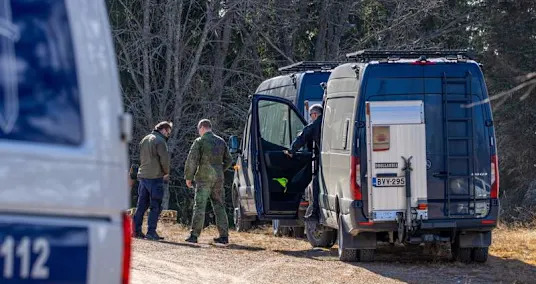
Ukraine has issued an apology to Finland after several of its drones crashed in Finnish territory a day earlier, the Foreign Ministry in Kiev said on Monday.
Foreign Ministry spokesman Heorhii Tykhyi stressed that the drones had not targeted Finland deliberately.
"We can say with certainty that Ukrainian drones did not fly towards Finland under any circumstances," he told journalists in Kiev.
The most likely scenario, he said, was that the drones had been diverted from their original course by electronic jamming from Russian air defences.
Several Ukrainian drones crashed to the east of the south-eastern city of Kouvola near Finland's border with Russia on Sunday.
It came as Ukraine had been repeatedly targeting Baltic ports in Russia's western Leningrad region to disrupt Russian oil exports.
Kouvola lies around 70 kilometres from the region.
Ukrainian President Volodymyr Zelensky and Finnish President Alexander Stubb also spoke about the incident during a phone call on Monday, according to the Ukrainian leader.
"Of course, we also discussed the drone incident that recently took place on Finnish territory," Zelensky wrote in an English-language post on X on Monday.
"Alex and I see the situation in the same way. We are sharing all necessary information."
Ukrainian drones have repeatedly strayed into the airspace of Russia's neighbours in the Baltic region and occasionally come down on their territories, most recently in Lithuania, Latvia and Estonia.
LATEST POSTS
- 1
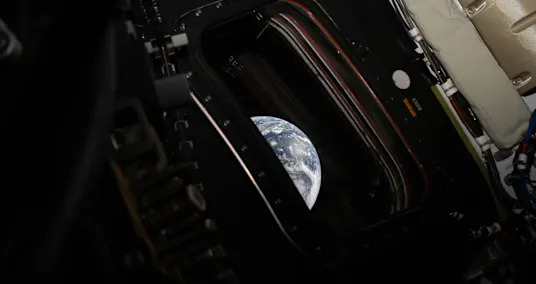
 See the 'amazing' photos of Earth taken on historic Artemis II moon mission
 - 2Pick Your Favored sort of cooking
- 3Carrying on with a Sans plastic Way of life: Individual Examinations in Maintainability
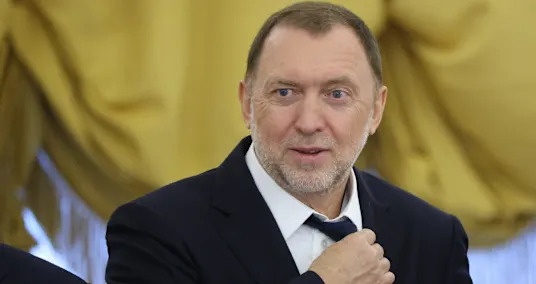
- 4Russian billionaire says 12-hour days and 6-day workweeks could help save the economy
- 5Popular Film Areas: A Worldwide Manual for Film Enchantment



- Zendaya serves bridal-coded fashion with old, new and borrowed gowns for ‘The Drama’ press tour
- The Job of a Migration Legal advisor: How They Can Help You
- She was the ultimate '90s fitness influencer. Now she's delivering Uber Eats — and rebuilding her life.
- What happened to Eleven after the ambiguous 'Stranger Things' series finale? Millie Bobby Brown knows — but 'swore herself to secrecy'
- Poll: By a 2-to-1 margin, Americans say Trump has done more to raise prices than lower them
- The Ursid meteor shower will be the last of the year, peaking just before Christmas: What to know and how to watch
- Pick Your #1 Japanese Food
- A new mom skipped a routine appointment. An infected cut led to a devastating diagnosis
- California warns of death cap mushrooms outbreak resulting in 3 deaths