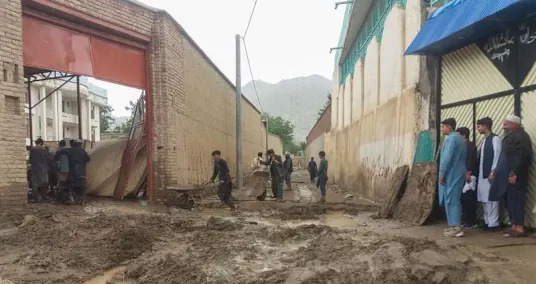
At least 61 people have been killed and 116 injured across Afghanistan since March 26 due to heavy rainfall, floods, landslides and lightning strikes, the Afghan government said on Saturday.
At least four people were still missing after floods affected thousands of families and damaged 2,448 houses, Afghan government spokesman Zabihullah Mujahid said in a post on X.
In addition, thousands of hectares of cropland was also destroyed, posing serious risks to rural communities who rely on agriculture for their livelihoods.
Deadly flooding has struck Afghanistan repeatedly in recent years, causing significant loss of life, injuries and widespread damage to homes, infrastructure and agricultural land.
Extreme weather events such as flash floods and droughts are increasing in Afghanistan, which experts link to the climate crisis.
Despite having a negligible carbon footprint, the country ranks among the most climate-affected nations and remains ill-prepared to cope after decades of conflict, poor infrastructure and a struggling economy, compounded by recent earthquakes and severe flooding.
LATEST POSTS
- 1
 Figure out How to Augment Your Rooftop Substitution Speculation
 - 2AI’s errors may be impossible to eliminate – what that means for its use in health care
- 3Tyler Childers' 'Snipe Hunt' 2026 Tour: How to get tickets, presale times, prices and more
- 4Manual for Savvy Home Lighting Framework: Lights up Your Space
- 5I watched more than 500 new movies this year. These are the 25 best ones.


- The Most Vital Crossroads in Olympic History
- Visiting This Japanese City Just Got A Little More Expensive (Here's What Travelers Should Know)
- 2024's Savvy Home Gadgets for an Associated Way of life
- Nepal’s youngest premier sworn in after releasing new rap song about unity
- Tablets: Upgrade Your Understanding Experience
- The Way to Business: Startup Illustrations Learned
- Hamas demanded displaced Gazans pay rent on beach tents amid torrential downpour, IDF reveals
- Uranus's small moons are dark, red, and water-poor
- 5 Most Expected Film Delivery