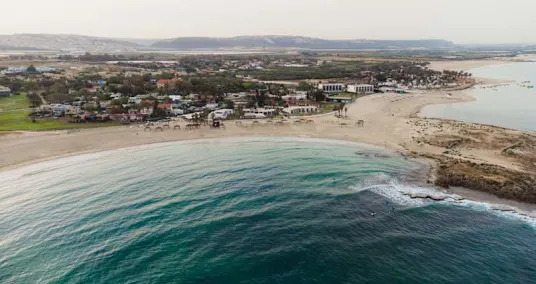
The discovery was made in an ancient shipwreck in the Dor Lagoon near the Carmel Coast, where archaeologists recovered nine pieces of unprocessed iron known as “blooms.”
Researchers from the University of Haifa said Wednesday that an underwater excavation off Israel’s northern Mediterranean coast uncovered what they described as the earliest known cargo of raw iron transported by ship, dating back around 2,600 years, Xinhua reported.
The discovery was made in an ancient shipwreck in the Dor Lagoon near the Carmel Coast, where archaeologists recovered nine pieces of unprocessed iron known as “blooms.” According to the university, the find provides direct evidence of how iron was transported in its earliest commercial stages.
The material was preserved in its original form, having solidified directly in a smelting furnace without undergoing forging or further refinement. Researchers said this distinguishes the cargo from later iron artifacts that typically show signs of shaping or tool-making.
Unlike copper and bronze, which could be melted into liquid form in ancient production processes, iron was heated with charcoal to produce a solid, porous mass. That mass was generally hammered to remove impurities and create denser material suitable for tools and implements.
The recovered blooms showed no indication of that secondary processing stage, suggesting they were transported immediately after production.

Earliest iron shipment discovered in ancient Mediterranean wreck
To determine the age and condition of the cargo, researchers conducted microscopic and chemical analyses.
Radiocarbon dating was also carried out on charred wood embedded in one of the pieces, helping confirm the timeline of the shipment. The findings were published in the journal Heritage Science.
Researchers said the cargo indicates that iron was being moved in raw form from production sites to other locations for further processing, pointing to a level of specialization in ancient manufacturing and trade networks in the Mediterranean.
The University of Haifa said the discovery provides new insight into early iron production and distribution practices in the region.
LATEST POSTS
- 1
 Young Muslims in Germany feel left out of Mideast debate, experts say
 - 2A Manual for SUVs with Less Noteworthy Gas Mileage
- 3Select Your Go-To Bluetooth Earphones
- 4How Mars 'punches above its weight' to influence Earth's climate
- 5Don't fall for it: These common tourist scams in Rome are easy to avoid if you know what you're looking for



- The Most Important Crossroads in Olympic History
- The Green Transformation: 5 Feasible Living Practices
- Two Indonesian UN peacekeepers killed in explosion in Lebanon
- 7 Countries Where Newcomers Feel Most Welcome, and 3 Where They Often Don’t
- Saturn's moon Titan may not have a buried ocean as long suspected, new study suggests
- Countdown to Artemis II: What to know about NASA's moon mission
- 2 ways you can conserve the water used to make your food
- Moon memorial: Artemis 2 astronauts name lunar 'bright spot' after mission commander's late wife
- Jesse Jackson hospitalized, under observation for a neurodegenerative condition